Tuesday, December 15, 2009

Is Timing Really Everything ?


One of the commonly spread concepts in investment is that "Timing is Everything". The mother of all laws in investment is "Buy Low Sell High", hence knowing WHEN to buy and WHEN to sell is key to everything. Although this seems very logical and correct but it may NOT be the Best strategy one should apply in investment, especially in personal finance.

Timing is indeed very important but it doesn't have to be "Everything".

Timing can be further categorized into (1) timing the exact moment and (2) timing a general period. For example, is current market just over its peak now vs generally the market is still rather high now. While it seems impossible to predict the exact future but its always simpler to get a sense of what may happen next.

I predict that The sun will rise tomorrow morning

vs

The sun will be seen at 7:23am after the clouds are cleared off in 13 minutes

If an investor is Correct All The Time, focusing solely on timing would be a smart thing to do. Otherwise, timing become a variable that can help you as much as killing you. As a matter of fact, it will always help you sometimes and it will always kill you some other time. Hence, knowing what to do when your timing is right or wrong becomes even more important especially when you can't be Correct All The Time. Namely the profit take and cut lost strategies.

It takes 2 timings to get one complete transaction. Buying at the lowest today does not guarantee anything yet if it goes lower tomorrow. Selling (short) at the highest today may still have a higher tomorrows. Hence a perfect transaction that is built by 2 perfect timings can only be justified as an after event. In probability study, even if you can guarantee getting the timing Correct, but there is only half the chance you can get it Correct again twice in a row. In other words, even if you know 100% correct timing when to buy low, but there is only 50% chance that you can also sell high at the perfect timing.

So no matter which ways you look at it, "Timing is Everything" is Not a Guaranteed method. It can make you one in a million, but most people will not get anything positive out of this strategy especially long term wise.

Hence you may need to form an investment strategy that can cater for any timings and events. That would be a rock solid personal finance. If there are certain timings or events that your current profile cannot handle yet, then just temporary exclude investing during those timings and events. Until one day you learn enough to build a more solid personal finance to cater for those timings and events. Thats how malpf's wealth pyramid was introduced earlier, you start with something you don't really need to know like Fix Deposit and slowly learn more before handling mutual funds and stock investment.

However one of the positive human nature is to pursue greatness. Everyone want to hit jackpot no matter how slim the chances are. Timing may not be Everything but it is the Ultimate investment skill. Until today, there is no one formula for Guarantee Exact Timing (GET) in investment yet. And the person who come up with one will sit in the same hall with Newton and Einstein, most probably above all of them.

Hence, totally abandon timing an investment is as ignorant as adhere solely to it, if not worse. What should we do then ?

Build a rock solid personal finance first, then leave a 5% room in it as play money for you to practice timing in real life. This way, overall you will still have a good life ahead of you while not giving up any chances that you can be great! When you find out you are really good at timing, slowly increase your 5%. Otherwise lower the 5% or totally eliminate it especially when your 95% are not even earning more than 5%.


How about you ? How much are you relying on Timing in your life ?


End of Year post


Well 2009 didn't quite pan out as we had expected. It started OK for those of us hoping for reasonable house prices in our city and Province. By the end of 2008, demand had completely collapsed with the MOI near 20. Compare that with 4 +/- now.

However the central banks and governments made a herculean effort to turn things around. Having ignored all these bubbles on the way up, and in fact helped inflate them, they threw caution to the wind.

Buying bad loans from banks, cutting interest rates to zero and in Canada doubling the CHMC's capacity to insure loans. How smart is that??? Encourage people with limited resources to access funds, when prices are high, when unemployment is starting to rise and when interest rates are at historic lows! Exactly what happened in the US. Maybe, just maybe too many policy makers are from Goldman Sachs...like Mark Carney, and Hank Paulson and Robert Rubin and dozens of other decision makers.

As I mentioned in a post early in 2009, the combination of lower mortgage rates and the 15% or so price drops meant that the actual carrying cost of an Average Vancouver property was 30-40% lower.

That was enough to bring people flooding back and we have had another boom in house prices.

Almost every bank economist and even Mark Carney at the Bank of Canada have warned on bubbling home prices. Duh..what do you expect? It would be like inviting your buddies to an all-you-can-eat ribs buffet and then reminding them of their bulging midriffs. They aren't going to hear you.

Rosenberg, the permabear, says the risk for mortgages has been shifted from the banks themselves who are happily gorging on the steepest yield curve for twenty years - ie they pay almost nothing to borrowers but lend long at much higher rates- while the CHMC will pick up the lion's portion of the losses, when and if they occur.

Here are some of my thoughts:

1) House prices have increased at a rate twice as fast as family incomes since 2002.

2) House prices in Canada are up 80% since 2002

3) In the US and Europe, consumer debt to income levels are dropping, as debts get paid by a chastened consumer. In Canada it is still rising.

4) In Vancouver we have been in a pressure cooker for prices for several years. Olympic build out and hype, low interest rates, relative lack of land, population growth and speculation have all fed the frenzy.

However ironically we have not been able to surpass our previous highs (yet) while many other cities in Canada who have not faced these events ..have and are.. hitting all time highs. Even in Ontario which has seen it's manufacturing base badly damaged.

This suggest that interest rates are the most important factor.

It certainly walks and talks like a bubble and does not seem sustainable to me. Unfortunately as a species we are not too concerned with sustainability. The wise thing to have done would have been to use tax and fiscal policy to try and slow down the rise in house prices. Instead they have done the opposite and are now faced with a monster which if disturbed will cause major collateral damage to everyone, even the prudent.

So it would seem that interest rates are the main driving factor.

Well short rates cannot go any lower, so they are 'as good as it gets'. Long rates have been drifting up in the US and I suspect will start drifting up here too. Who wants to be paid 3.5% for a ten year bond. Not me.

I have no forecast for interest rates, but will watching them closely. Generally speaking, short rates are set by the Central banks and the bond markets decide long rates. However there is so much manipulation in the market, with Central banks buying bonds long bonds to keep long interest rates down, and keeping short rates too low (some say 4% too low) for too long, inflation be damned, that they don't make sense.

Remember Greenspan - the previous Fed Chairman, he told folks to go short and variable in their mortgages, and then proceeded to raise rates 16X!! Basically pushing everyone who listened to him into foreclosure. It was as if he was a Manchurian candidate planted by another country to destroy the US.


Well it seems to me like a lot of folks are doing a Greenspan here. They look at their 2.5% short term rate and can afford the payments, but if rates were to suddenly move up by 2-3% they would be calling the CHMC to pick up the keys and then we would all pick up the cost.

They say predictions are only made by fools, so here is mine:

All assets are linked now. Gold and stocks and commodities. Until they keep rising , our RE will also have a strong bid. Some of this is fear unwinding, some is our old friend speculation coming back. A lot is based on the US dollar carry trade...borrow US dollars for next to nothing and buy something, anything.

When and if this all unwinds, then fear will return and folks will see their homes once more as a burden to carry and not path to life-long financial freedom.

When will that happen? Will it even happen? We shall see

Happy holidays to you all. May you have a prosperous and healthy New Year.

Sunday, December 13, 2009

Is Loan really Better than CASH ?


You may have heard people are claiming its better to get a car loan than buying it with cash even if you could, especially from those car salesmen. Likewise, property investment gurus say that its better to get a home loan. These are some of the key reasons why they say loan is better than cash;
  • Liquidity - keep your money with you, you may need it in future.
  • Income tax department may come 'disturb' you seeing that you have loads of cash.
  • buying stuff with loan usually gets more gifts.
It shouldn't be too hard to realize the main reasons why people pursue you to get a loan is because they may get a share of the interest you are paying. For example, car salesmen earn double the commission when they sell you a car with loan. Property agents want you to buy more property with the limited money you have hence they can earn multiple commission instead of just once. Other than that, most others who pursue the same are most properly are just due to ignorance.
This situation is exceptionally terrible when you are buying a new car. The car salesmen will literally give you a bad service if you mention you will buy the car with cash. They will try their worst effort pursuing you to get the loan no matter what. Else they would rather NOT sell you the car at all.
Getting a loan simply mean Pay Less NOW AND Pay More at the end. To be precise, you will have to pay interest to the loan you are getting.

Loan = Cash + interest

So you will definitely be paying more when you buy something with a loan. If you do not need the facility of 'Pay Less Now', you are basically paying the interest for nothing but ignorance.

Lets clear away the simpler excuses first;
  • Income tax only penalize those who earn income illegally so unless you DO have something to hide else there is really no reason to worry about any audit.
  • All 'gifts' come from your own money, the more gifts you receive in a deal, the more suspicious you should worry about the real value you are receiving.


Now the toughest part is the liquidity. It will be very hard to say keeping some money with you is NOT a liquidity option. But it is not necessary always the best liquidate option.

First of all, when you buy something with cash, its just between you and the seller. However, when you get a loan to buy the same thing, there is at least an additional party involved ie. the person who gives you the loan. Its has not just become a 3 parties complexity, its actually a totally 2 different transactions and a 4 different roles play.

( with Cash )
Buyer and Seller

vs

( with Loan )
Buyer and Seller
Borrower and Lender

So in addition to the interest, you will also pay more fees when you get a loan. When you want to sell your item, you will need to pay this fees again and perhaps also getting approval from this lender. Relatively a cash purchased item can be sold off immediately. From this perspective, doesn't cash purchase sound like a more liquidated option ?

Lets say you could buy something with cash at $100,000. You may also get a 5% loan and pay $1,060 monthly for the next 10 years.

Lets say half way down the road on the 5th year, the item has depreciated to $50,000 (13% depreciation rate). If you bought it with cash, you would end with a net cash $50,000 after selling it. If you got a loan, you would have paid $63,639 in the past 5 years, meaning you still have $36,361 cash at hand. Together with the $50,000 you may think you have more than $80,000 but you still have to repay the capital left in the loan, so at the end you end with a net cash of less than $40,000 which is less than the cash purchase option.

On the other hand, lets say your item appreciate 10% a year. On the 5th year, you could sell it for $161,051. But if you got a loan in the first place, you may get back about $140,000 net, which is still significantly less.


So no matter if your item appreciate or depreciate, if you sell off your item earlier or later, buying something with loan will only end you with ;
  1. slower to sell off your item because it involves 2 transactions and it cost more fees too
  2. getting less cash back at the end
The last I check, disposing something off slower and getting back Less cash is NOT exactly a liquidating option at all.

Sunday, December 6, 2009

Will Banks take care of your interest ?

I was once young and naive. Banks are so big, earn so much money that they wouldn't bother to cheat my money. Its safe to leave everything to them and they will take good care of my money, especially when I am not a big user ... but ...


Notice in this statement that previous left over balance is only 1 cent. As a matter of fact, this account has been having 1 cent balance for 2-3 months. Recently I had to use up to RM 100 so that I can use ALL the points to exchange for food voucher before cancelling it. Suddenly there is a finance chargees of 22 cents.

How in the world can there be a 22 cents finance charges out of a 1 cent balance ? The finance charge is 16%.

After digging out the whole Eon team including the highest management demanding for an explanation, no one can answer that except apologizing and waiving the said ridiculous calculated fee. I couldn't help to think how many people out there have been abused by such system bug ? 22 cents x 10 million EON credit card holders = 2.2 millions a month.

Wednesday, December 2, 2009

Help for broadcasters- off topic.

Regular readers know that my pet peeve is the broadcasters, like Canwest Global, who got themselves into a mess by buying assets at the top and then when they cannot service the loans, asking for Federal help (aka bail-outs) or money from the cable companies (which will probably come out of our hides in the form of higher cable fees).

The irony of a right-wing organization like Canwest, which through the National Post used every opportunity to slam unions and bail-outs, and promoted the free-market devoid of government intervention, asking for this is beyond bizarre.

If your business fails- you close down and someone else buys your assets and gives it a shot. You don't ask for government help or demand contracts be renegotiated with other succesful businiesses.

In any case the CRTC is asking for feed-back here:

http://television.askingcanadians.com/affordability-of-local-tv/

This is what I submitted. It took me a few minutes to do so.

Please CRTC DO NOT give in to the pressure from the TV Monopolies. I am a small businessman and if I mess up, over-extend myself and get into financial trouble, I have to deal with the consequences, which include possible bankruptcy.

No one will come to my aid.

However, the TV companies over-paid for assets, over-paid their executives and now are complaining that if we dont face an extra tax to support them they will shut down local programming.

What a farce! Maybe I would be more receptive if they gave an undertakeing to cut their mutimillion dollar purchases of US programming and promised to cap executive pay in the future.

Our media ownership is far too concentrated. Let them break up and others will take over. If necessary the small independants can be funded,but please dont send our money into a big black corporate hole.

Stand up for the Canadian programming and for diversity of ownserhip and views.


....................................

BTW - do we need more competition in the cable space too, you betcha. They are already scooping up a bigger share of the internet and cell phone markets too.

Ok you squeeze another post out of me...


Anon said:

"In Nov 2008, we almost had a great depression. That is what it took to bring the prices down.

Now we are much higher. Anyone guess what it's going to take for an encore? Probably nothing, hence if prices do drop it will be 5-10% at MOST."

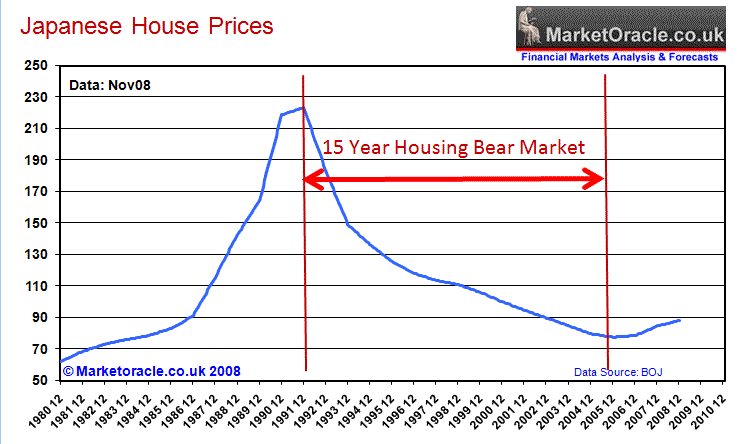
He/she has a point. The rebound has happened at lightening speed. Look at Japan for example. When their RE bubble started to burst in 1992, interest rates were cut aggressively, and stayed low. In fact the cutting started just before the bust got going.

However once it started there was nothing that could prevent the drop. However here and in the US, our governments have also cut interest rates to the same absurdly low levels and while it hasn't done much for US housing, our prices have reignited again.


The two charts above show the price of Japanese RE and interest rates:


Tuesday, December 1, 2009

Cash Flow vs Asset, which is more Important ... ?


Cash flow is money in your hand where you can USE right now to buy food and petrol. Asset is something that is worth some value but may not be CONSUMED directly like a house and car.
Although there may be more complication like cash is part of asset and the correct wordings for this topic is liquidated vs non-liquidated assets etc. But if we simplify personal finance as much as possible, cash is cash and asset indicate non liquidated net asset.
Many people who are good with their personal finance numbers always asked which is more important ? Maintain a positive Cash Flow or increase net Asset ? Well, the simple and direct answer is:

Cash Flow is more Urgent and
Asset is more Important

Enough cash flow is important for you to live on. At the moment cash ran out, you may start to suffer so much that your personal emotion may kick in affecting all your other judgement; Including selling your asset way under its value. So what if you have a billion dollar castle in a desert while all you need is a drip of water ? So cash flow not only allows you to get by but it can totally destroy you. When cash flow approaches negative arena, its an Urgent warning !

A properly setup asset will automatically increase your worth in time and it is the key to passive income in personal finance. So the long term goal is to have enough asset setup so that you can live happily ever after. Without any asset, you will always HAVE TO earn what you need. Active income means you HAVE TO always work despite if you like it or not. You will have less choice. So setting up good assets are Important in long run.

Following the Urgent vs Important concepts, the standard way of improving the situation is:
  1. Make sure you solve all the urgent matters,
  2. then allocate time to do more important stuff,
  3. and make sure all the important stuff are done to eliminate chances of any urgent matters in future.
Like wise ...
  1. Make sure you have enough cash to get by then => $C
  2. Acquire as many good asset as possible and lastly => ( $A x i% )
  3. Target to have enough asset's return to cover all your cash flow needs
( $A x i% ) > $C

Needless to say, most people are rat racing in step 1 for a long long time. Then once they moved on to step 2, they felt relief and may relax too much that they forgot to keep a healthy level of cash flow. Not knowingly that cash flow can come back anytime to destroy all the stuff you have setup in step 2. This is especially obvious for people who turn from a career to a business during their mid age life.

Before reaching step 3, you will have to juggle both your cash flow and asset ....